
Our Story

Our Strategies
Our Portfolio
How We Invest
Resources


Our Story
Our Strategies
Our Portfolio
How We Invest
Resources


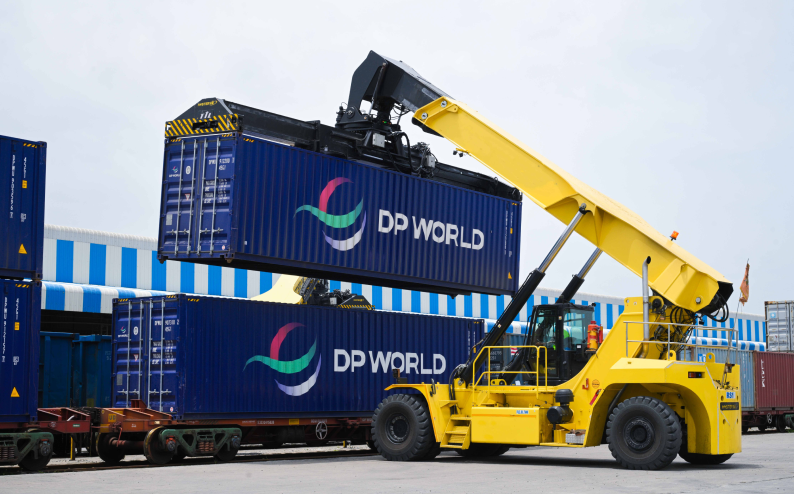
India’s logistics sector remains heavily reliant on conventional road transport. Hindustan Infralog Private Limited transformed conventional logistics into an integrated, technology-enabled multimodal solution by combining first-mile transportation, rail movement, last-mile delivery and real-time digital visibility on a single platform.
During FY 2026, the platform moved more than 25,000 containers from Hazira to the National Capital Region through rail-based multimodal solutions. Electric Reach Stackers at key inland terminals replaced diesel-powered cargo-handling equipment, while a CO₂ Emissions Calculator enabled shipment-level carbon tracking, Scope 3 estimation and informed modal-shift decisions.
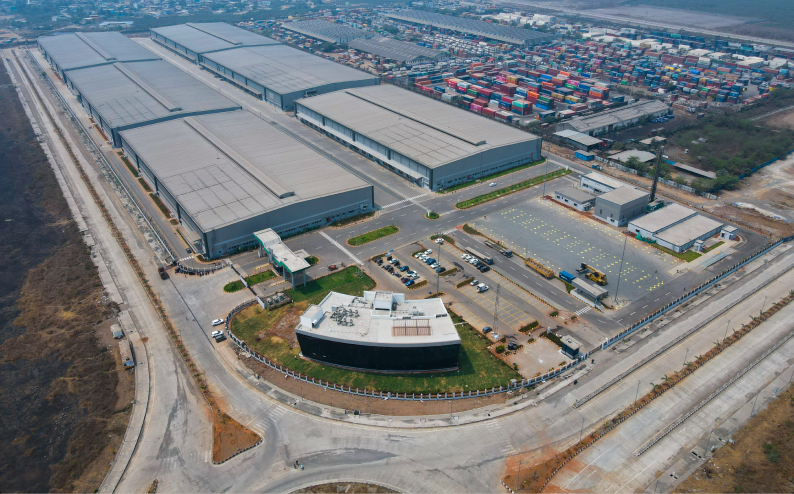
Port operations generate emissions through cargo-handling equipment, terminal vehicles, electricity consumption and backup-power systems. Hindustan Ports Private Limited implemented a decarbonisation strategy spanning equipment electrification, renewable-energy adoption and energy-efficiency improvements.
Actions included deploying electric rubber-tyred gantry cranes, electrifying terminal vehicles, replacing conventional cargo-handling equipment with efficient alternatives, and increasing renewable-power procurement through open-access green power and I-RECs. The company is also exploring Battery Energy Storage Systems (BESS) to support renewable-energy integration and reduce reliance on diesel backup.
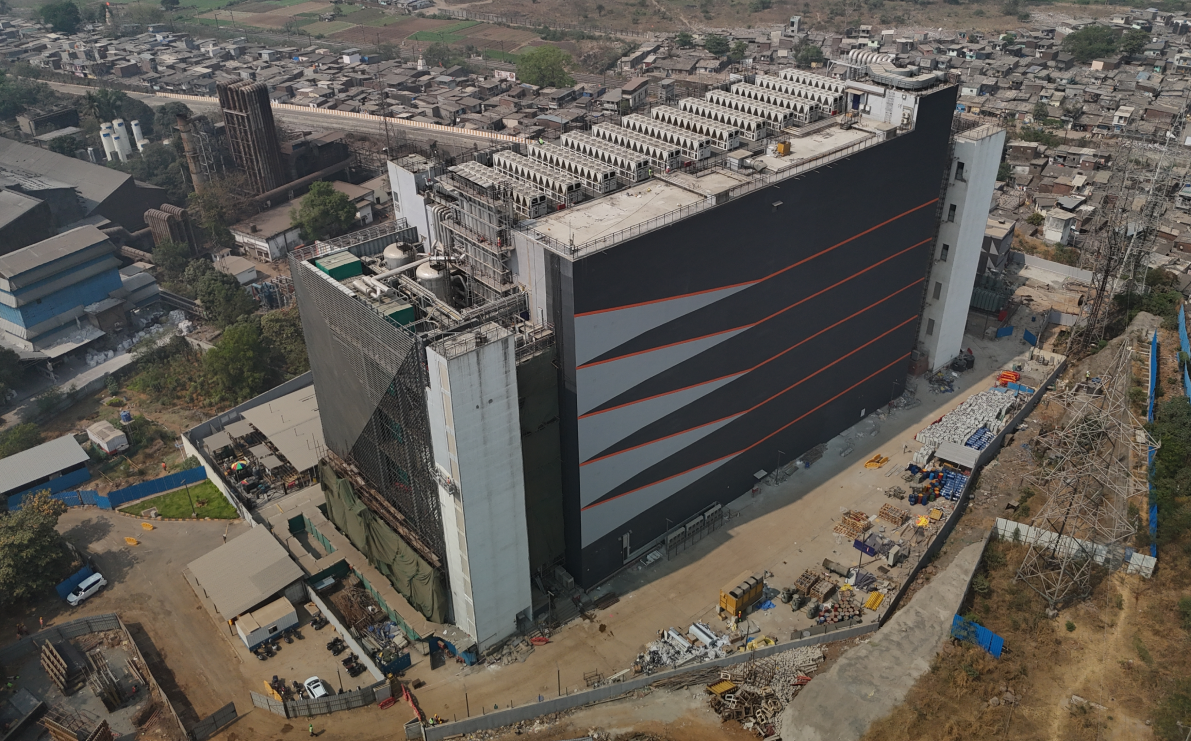
Liquid-cooled data centres can require significant volumes of water, with demand increasing as capacity expands. At its BOM campus in Navi Mumbai, Digital Edge India launched a large-scale recycled-water initiative described in the report as an industry-first in India.
The campus will use treated municipal greywater for operational requirements, including advanced liquid-cooling systems, reducing dependence on freshwater. The campus is designed for a target annualised Water Utilisation Effectiveness (WUE) below 1.75, and the approach creates local economic value by purchasing municipal greywater that would otherwise be discharged into the sea.
Greenfield construction of large infrastructure projects involves multiple work fronts and high-risk activities. Bhogapuram International Airport embedded safety across construction through a dedicated Environment, Health and Safety framework, leadership-led reviews, inspections and audits, continuous monitoring of leading and lagging indicators, mandatory induction, activity-level Hazard Identification and Risk Assessment, and competency-based and Behaviour-Based Safety training.
High-risk work—including work at height, lifting, excavation, electrical works and confined-space entry—was governed through strict controls, risk assessments and job-hazard analyses. CCTV monitoring, digital incident reporting, emergency drills and compliance tracking complemented comprehensive worker welfare measures, including medical and first-aid support, occupational-health and heat-stress monitoring, safe drinking water, sanitation and hygiene facilities.

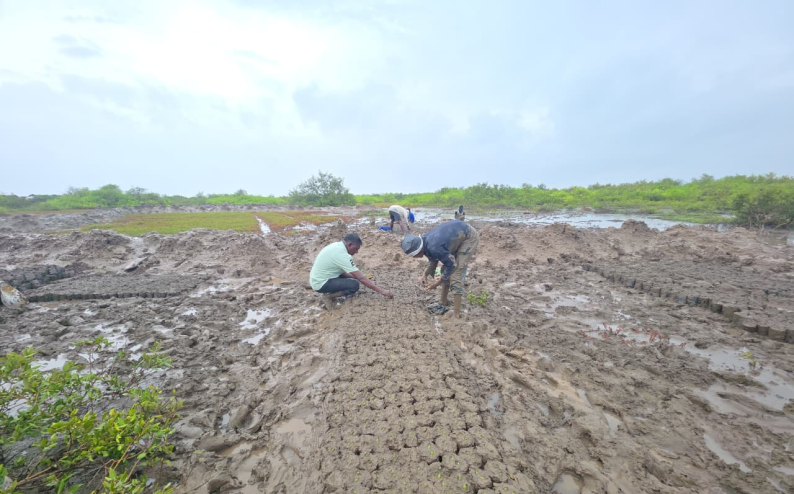
Mangrove ecosystems provide protection from coastal erosion, storm surges and flooding while supporting biodiversity and carbon sequestration. Hindustan Ports Private Limited identified coastal sites in Kochi and Surat for mangrove restoration.
Over three years, the programme restored 50 acres of Kochi coastline by planting more than 66,000 mangrove saplings across a six-kilometre shoreline, achieving an over 80% survival rate. In Surat, GIS-based assessment supported site selection for a further 17,350 saplings, with local communities engaged in nursery development and restoration activities.

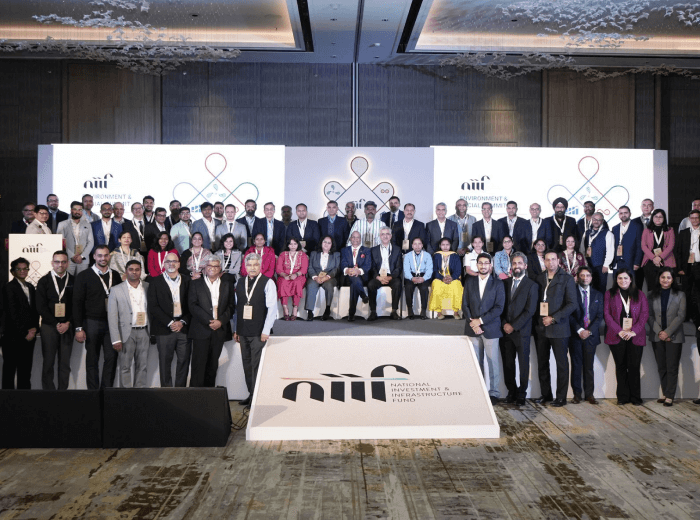
NIIF endorses the One Planet Sovereign Wealth Fund (OPSWF) Initiative, a platform created by global sovereign wealth fund community, asset managers and asset owners. The underlying objective of OPSWF is to help organisations understand climate change risks in their investment horizons and decision making and explore investment opportunities around the transition to low emissions economy. As an active member of OPSWF, NIIF has access to global best practices and policies that support the firm’s commitment in making sustainable investments across its funds. NIIF has internalised the OPSWF Initiative principles to address the climate change risks emanating from its investment.
Alignment: Build climate change considerations, which are aligned with the funds’ investment horizons, into decision-making.
Ownership: Encourage investee companies to address material climate change issues in their governance, business strategy and planning, risk management and disclosure to promote value creation.
Integration: Integrate the consideration of climate change-related risks and opportunities into investment management to improve the resilience of long-term investment portfolios.

At NIIF, we are committed to embedding ESG factors across our investment strategy. We recognise that responsible investment is essential for managing risk, generating sustainable returns, and contributing to a resilient global economy. Our rationale is grounded in the belief that ESG integration enhances long-term value creation for our clients, shareholders, and the broader community.
Reaffirming our commitment, we became signatory to the Principles for Responsible Investment (PRI) in September 2025. PRI, set up with the support of the United Nations, is a globally recognised voluntary initiative with over 5000 members. It aims to promote the integration of ESG factors into investment decision-making processes.
Becoming a PRI member as an “Asset Owner” is a strategic move for NIIF Limited. It reinforces NIIF’s commitment to responsible investment, provides us access to global networks and industry-leading resources, enables benchmarking against peers, and aligns our ESG practices with the highest global standards.Moving forward, we will continue to augment our ESG governance framework, advance data-driven assessment tools, and publish periodic progress updates to ensure transparency and accountability in our responsible investment journey.






 Learn More